
Books & Catalogs
Searchable Directory of GEOMETOR Book Codices & Mathematical Catalogs
Browse all 83 Book Codices & Mathematical Catalogs across 39 historical authors and 11 constructive catalog archives—filter by language or group, search by title or author, and sort dynamically by title or year.
The Book of Calculation
Liber Abbaci
Leonardo Pisano’s revolutionary 1202/1228 treatise introducing Indo-Arabic numerals, commercial arithmetic, and the golden rabbit sequence to the Latin West.
Practice of Geometry
Practica Geometriae
Leonardo Pisano’s 1220 medieval masterwork on practical geometry, field divisions, circle measurement, and Euclidean regular polyhedra.
On Learned Ignorance & Mathematical Writings (1440)
De Docta Ignorantia Libri Tres
Read Online: On Learned Ignorance & Mathematical Writings (1440)
De Mathematicis Complementis
Scripta Mathematica
Nicholas of Cusa’s constructive mathematical treatises on isoperimetric transmutations, Archimedes’ spiral, circle quadrature, and the Golden Proposition.
Summary of Arithmetic, Geometry, Proportions and Proportionality
Summa de Arithmetica, Geometria, Proportioni et Proportionalita
Pacioli’s monumental 1494 Venetian compendium of speculative arithmetic, Hindu–Arabic algorism, Cossic algebra, Euclidean proportion theory, double-entry bookkeeping, and practical geometry.
On the Divine Proportion
De Divina Proportione
Pacioli’s 1509 Venetian treatise on the Divine Proportion, the thirteen marvelous effects of Euclid’s Book XIII, Vitruvian architecture, the Roman alphabet, and the sixty Platonic and Archimedean solids drawn by Leonardo da Vinci.
Instruction in Measurement
Underweysung der Messung, mit dem Zirckel und Richtscheyt
Albrecht Dürer’s foundational treatise on compass and straightedge construction, spirals, conics, planar polyhedral nets, and perspective.
The Six-Cornered Snowflake
Ioannis Kepleri S. Cæs. Maiest. Mathematici Strena seu de Nive Sexangula
Kepler’s New Year’s gift on the six-cornered snowflake, founding mathematical crystallography, discovering the space-filling rhombic dodecahedron, asserting the sphere close-packing conjecture, and tracing Fibonacci growth in flowers.
The Harmony of the World
Ioannis Keppleri Harmonices Mundi Libri V
Kepler’s masterwork uniting the geometric knowability of constructible polygons (Book I), the complete architectonic classification of 11 uniform planar tilings and star polyhedra (Book II), and the harmonic third law of planetary motion (Book V).
Essay on Conics
Essay pour les Coniques
Pascal’s 1640 broadside announcing the Mystic Hexagram theorem for any conic section, foundational projective definitions, and universal projective invariance.
On Straight Lines Mutually Intersecting
De Lineis Rectis Se Invicem Secantibus Statica Constructio
Giovanni Ceva’s landmark 1678 Milan treatise applying Archimedean statics and the law of the lever to geometric concurrency and ratio geometry.
An Easy Solution of Certain Very Difficult Geometric Problems
Solutio facilis problematum quorumdam geometricorum difficillimorum
Euler’s 1765 St. Petersburg memoir discovering the Euler line connecting the orthocenter, centroid, and circumcenter of every triangle, deriving the six mutual quadrances among the four classical triangle centers, and solving the inverse reconstruction problem via symmetric polynomials.
The Geometry of the Compass
La Geometria del Compasso
Lorenzo Mascheroni’s 1797 Pavia masterpiece proving constructively across twelve books that every Euclidean construction can be executed with the compass alone.
Properties of Remarkable Points of the Rectilinear Triangle
Eigenschaften einiger merkwürdigen Punkte des geradlinigen Dreiecks
Feuerbach’s 1822 Nuremberg monograph discovering the nine-point circle, proving its fourfold tangency with the incircle and excircles of every triangle, and formulating the orthic inradius.
Geometrical Constructions
Die geometrischen Constructionen, ausgeführt mittelst der geraden Linie und Eines festen Kreises, als Lehrgegenstand auf höheren Unterrichts-Anstalten und zur praktischen Benutzung
The 1833 treatise demonstrating that every Euclidean construction can be performed using only a straightedge, given a single fixed circle and its center.
The First Six Books of the Elements of Euclid
In Which Coloured Diagrams and Symbols Are Used Instead of Letters for the Greater Ease of Learners
Oliver Byrne’s landmark 1847 Chiswick Press edition using brilliant four-color diagrams and symbols in place of letters for Euclid’s Books I–VI.
Geometry of Position
Geometrie der Lage
Karl Georg Christian von Staudt’s foundational 1847 treatise Geometrie der Lage, liberating harmonic division, complete quadrangles, projectivities, and conic sections from metrical measurement through pure straightedge incidence.
Contributions to the Geometry of Position
Beiträge zur Geometrie der Lage
Karl Georg Christian von Staudt’s foundational 1857 treatise Beiträge zur Geometrie der Lage (Zweites Heft), establishing the metric-free Algebra of Throws (Rechnung mit Würfen), pure straightedge addition and multiplication, and intrinsic projective coordinates.
Methods and Theories for Geometrical Constructions
Read Online: Methods and Theories for Geometrical Constructions
Lectures on Modern Geometry
Vorlesungen über neuere Geometrie
Moritz Pasch’s foundational 1882 treatise establishing the axioms of linear order, planar separation, ideal sheaves without infinity, and modern hypothetico-deductive rigor.
A Sequel to the First Six Books of the Elements of Euclid
John Casey’s foundational 1888/1892 treatise extending Euclid’s Elements into modern synthetic circle, projective, and triangle geometry.
Conics
ΚΩΝΙΚΩΝ ΒΙΒΛΙΑ
Apollonius of Perga’s foundational treatise on conic sections, generating parabola, ellipse, and hyperbola from a single oblique cone and establishing asymptotes, focal properties, normals, and conjugate diameters.
An Essay on the Foundations of Geometry
Russell’s 1897 Cambridge Fellowship dissertation deducing the a priori axioms of projective and metrical geometry from the form of externality and nineteenth-century metageometry.
Foundations of Geometry
Grundlagen der Geometrie
David Hilbert’s epoch-making axiomatic foundation of geometry, establishing the independence, consistency, and completeness of geometric axioms.
Geometrography
La Géométrographie, ou Art des constructions géométriques
Lemoine’s 1902 treatise establishing geometrography—the quantitative measurement of simplicity and exactitude in geometric constructions via five elementary operations.
The Principles of Mathematics
Russell’s landmark 1903 logicist investigation of pure mathematics and the relational foundations of projective, descriptive, and metrical geometry.
On Growth and Form
Sir D’Arcy Wentworth Thompson
Sir D’Arcy Wentworth Thompson’s classic mathematical and physical analysis of biological morphology, scaling laws, surface tension, cellular foams, equiangular spirals, phyllotaxis, bone architecture, and coordinate transformations.
The Elements of Dynamic Symmetry
Jay Hambidge’s foundational recovery of Dynamic Symmetry, root rectangles (√1 to √5), reciprocal diagonals, and the rectangle of the whirling squares in Greek design and phyllotaxis.
The Thirteen Books of Euclid’s Elements
The Thirteen Books of Euclid’s Elements
The thirteen books of plane geometry, proportion, number theory, incommensurable magnitudes, and the five regular polyhedra, translated from Heiberg’s Greek text with commentary by Sir Thomas Little Heath.
The Noetics of Geometry
De Noetica Geometriae — Origine Theoriae Cognitionis
Fr. Peter Hoenen’s epistemological treatise investigating the origin of geometric knowledge through Thomistic intuitive formal abstraction and modern axiomatics.
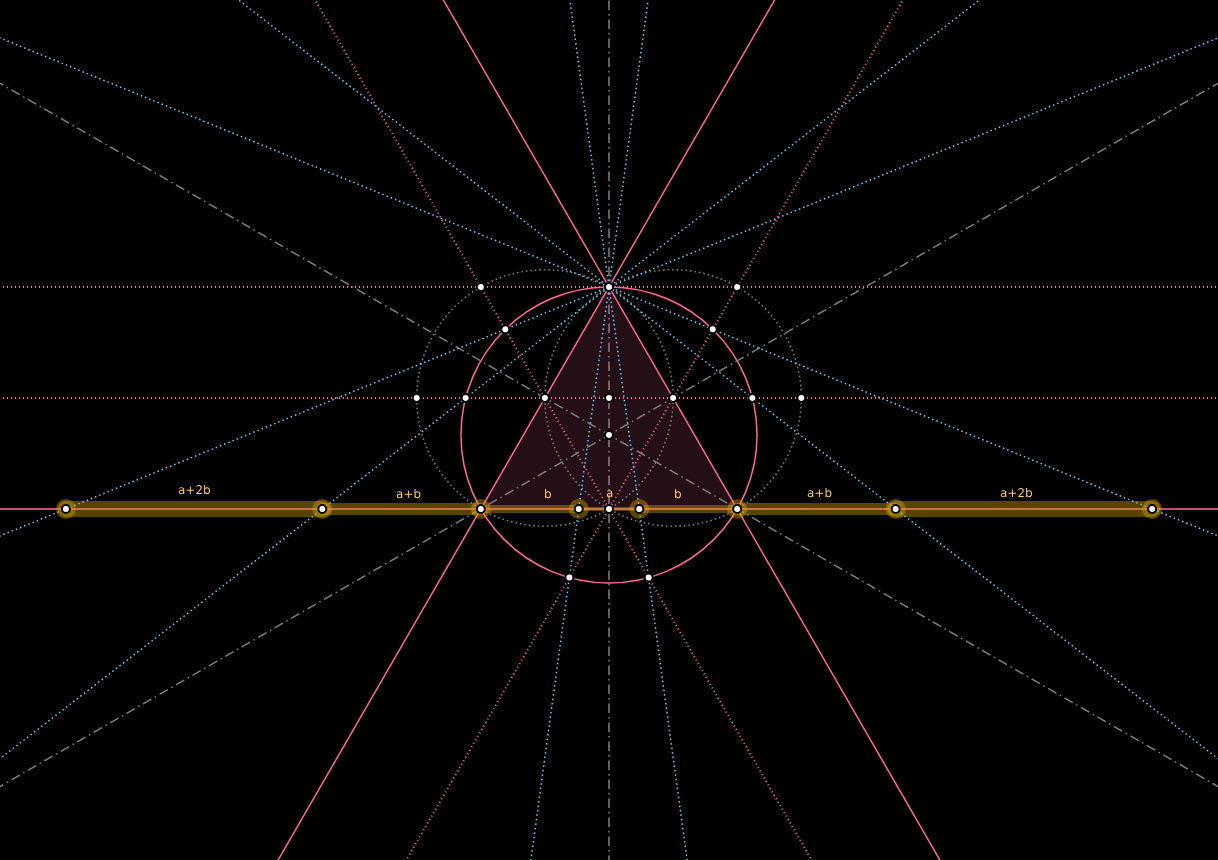
Catalog of Golden Ratio Constructions
A machine-verified symbolic catalog of 45 geometric constructions across seven families certifying 129 exact golden sections.
Codes
Interactive symbolic catalog in geometor/codes.
Fundamentals of Constructive Geometry
55 foundational geometric constructions across 353 manuscript folios synthesized into a synchronized 3-track Book Codex.
Polyhedra
Interactive symbolic catalog in geometor/polyhedra.
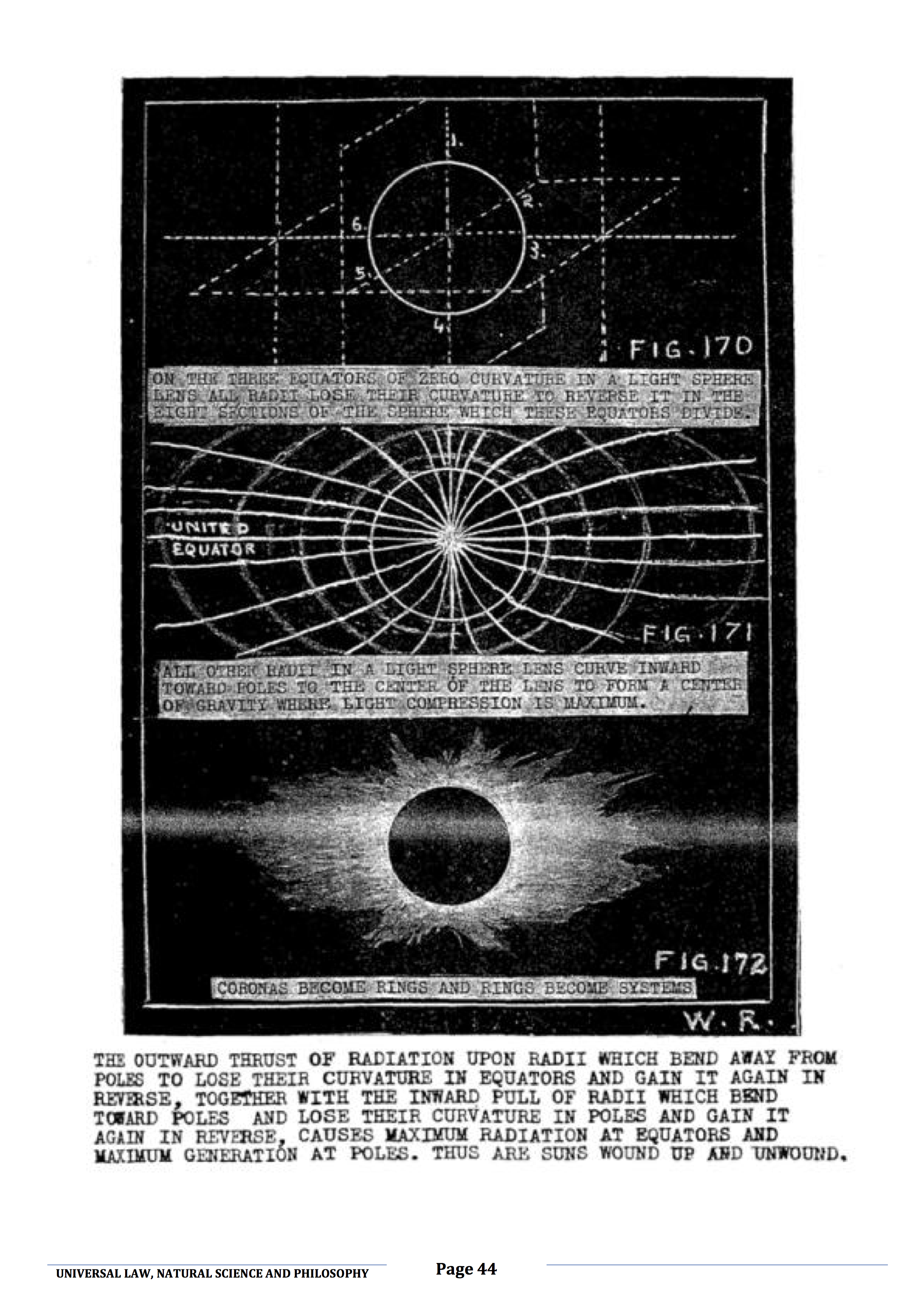
The Wave-Field Cosmogony of Walter Russell
A geometric and 3D visual treatise synthesizing Walter Russell’s wave mechanics, cube-sphere wave-fields, and nine-octave periodic table of elements.
The Cosmographic Mystery
Prodromus Dissertationum Cosmographicarum, continens Mysterium Cosmographicum
Kepler’s groundbreaking cosmological treatise nesting the five regular Platonic solids between the six Copernican planetary orbs, proving insphere/circumsphere polar duality, and celebrating the Two Great Treasures of geometry.
The Erlangen Program
Vergleichende Betrachtungen über neuere geometrische Forschungen
Klein’s landmark inaugural monograph synthesizing geometry through the invariant theory of transformation groups.
Famous Problems of Elementary Geometry
Vorträge über ausgewählte Fragen der Elementargeometrie
Klein’s celebrated lectures establishing the algebraic criteria for geometric constructibility and proving the transcendence of e and π.
Science and Hypothesis
La Science et l’Hypothèse
Poincaré’s foundational 1902 treatise on non-Euclidean geometry, the continuum, translation dictionaries, the heated-disk world, and geometric conventionalism.
Home Study Course
Walter and Lao Russell’s comprehensive 12-Unit, 48-Lesson course on universal law, natural science, rhythmic balanced interchange, and wave-field mechanics.
Mathematical Catalog of Fibonacci Numbers and the Golden Section
A 22-entry exact symbolic mathematical catalog of the planar and solid Golden Ratio constructions, exact trigonometry, phigit numeral systems, and Fibonacci–Lucas structures curated by Dr. Ron Knott.
Principles of Rational Trigonometry & Universal Geometry
A 28-principle executable codex formalizing Rational Trigonometry, Universal Geometry, and Chromogeometry in exact SymPy algebra and interactive vector models.
Spherics
Menelai Sphaericorum Libri III
Menelaus of Alexandria’s foundational treatise on spherical geometry, introducing intrinsic spherical triangles, the Menelaus transversal theorem, and harmonic cross-ratios.
Summa Theologiae and Disputed Questions
Summa Theologiae et Quaestiones Disputatae de Potentia et de Veritate (c. 1256–1273)
Aquinas’s mature theological syntheses: Ipsum Esse as the actuality of all acts, the geometer’s infinite line, turning to phantasms in the Summa Theologiae, and the origin of indemonstrable principles in De Potentia and De Veritate.
Commentary on Boethius’s On the Trinity (Questions V–VI)
Expositio super librum Boethii De Trinitate — De Divisione Scientiae Speculativae et Materia Intelligibili (c. 1257–1259)
Aquinas’s foundational treatise on the division of speculative science, distinguishing mathematical abstraction of form (abstractio formae) and intelligible matter from metaphysical separation (separatio), and establishing why mathematical judgment terminates at the imagination.
Commentary on Aristotle’s On the Soul
Sentencia libri De anima (c. 1267–1268)
Aquinas’s psychological foundations for mathematics: why the human soul never understands without turning to phantasms (conversio ad phantasmata), the distinction between physical flesh/bone and spatial continuum, and the hand as organ of organs.
Commentaries on Physics and On the Heavens
In octo libros Physicorum et In libros De caelo et mundo expositio (c. 1268–1273)
Aquinas’s physical doctrine on mathematical entities: abstrahentium non est mendacium (no falsehood in abstraction), immobile place grounding rigid translation, the impossibility of composing a continuum from indivisible points, and three-dimensional magnitude.
Commentary on Aristotle’s Posterior Analytics
Expositio libri Posteriorum Analyticorum (c. 1270–1272)
Aquinas’s exposition of Aristotle’s theory of demonstration: supreme certitude in mathematics, subject-genus vs proper attributes, common conceptions vs postulates, why geometers do not demonstrate of dust diagrams, and the genesis of first principles from experience.
Commentary on Aristotle’s Metaphysics
Sententia super Metaphysicam (c. 1270–1272)
Aquinas’s metaphysical pinnacle of geometric epistemology: individual vs common intelligible matter, the derivation of actuality from motion, and the famous revelation of heuristic discovery: geometers discover truth by dividing figures in act (Euclid I.32 and III.31).
On the Five Regular Bodies
Libellus de Quinque Corporibus Regularibus
Piero della Francesca’s landmark Renaissance treatise uniting classical Euclidean stereometry with abacus radical algebra, mutual Platonic inscriptions, and Archimedean solids.
The Almagest
Μαθηματικὴ Σύνταξις
Ptolemy’s foundational treatise on spherical cosmology, sexagesimal chord trigonometry, regular decagon and pentagon construction, Ptolemy’s Theorem on cyclic quadrilaterals, chord difference and half-arc lemmas, and spherical Menelaus trigonometry.
Planisphere
Planisphaerium
Ptolemy’s foundational treatise on stereographic projection of the celestial sphere onto the equatorial plane, conformal circle preservation, and the mathematical geometry of the planispheric astrolabe.
The Sand-Reckoner & Semi-Regular Solids
Τρισκαίδεκα ἡμικανονικὰ στερεά
Pappus V.19 census of the thirteen Archimedean semi-regular polyhedra, the 14-piece Stomachion square dissection, and The Sand-Reckoner preserving Aristarchus’s heliocentric cosmos and myriad-octad powers.
Book of Lemmas
Kitāb al-Maʾkhūdhāt / Liber Assumptorum
Fifteen planar gemstones preserved in Arabic by Thābit ibn Qurra: the Arbelos (Prop. 4), Twin Circles (Prop. 5), Pappus chain (Prop. 6), Neusis trisection (Prop. 8), Salinon (Prop. 14), and golden section (Prop. 15).
On the Equilibrium of Planes
De Planorum Aequilibriis
Axiomatic statics, commensurable and incommensurable Law of the Lever (I.6–7), triangle centroid X(2) (I.13–14), and 3:2 parabolic segment centroid (II.8).
Measurement of a Circle
Dimensio Circuli
Double exhaustion of circle area by a right triangle (A = ½Cr) and rational 96-gon bisection bounding 3 10/71 < π < 3 1/7.
Quadrature of the Parabola
Quadratura Parabolae
Mechanical balance quadrature and pure geometric exhaustion of the parabolic segment proving Area = 4/3 Triangle ABC via Archimedes’ Lemma and 1/4^n series.
Sphere and Cylinder, Spirals & Conoids
De Sphaera et Cylindro
Curved surface area, volume, and 2:3 Tomb Theorem of the sphere and cylinder, Eutocius’s Doric cubic intersection, spiral subtangent rectification, and quadrics of revolution.
The Method of Mechanical Theorems
Περὶ τῶν μηχανικῶν θεωρημάτων πρὸς Ἐρατοσθένην ἔφοδος
Deciphered by Heiberg from the Constantinople Palimpsest: Archimedes’ secret mechanical slice-balancing discovery of the parabola, sphere, ungula (1/6 prism), and bicylinder (2/3 cube).
Euclid’s Data
Δεδομένα
Euclid’s foundational treatise of the Ancient Treasury of Analysis (Δεδομένα) establishing functional geometric determinacy across Definitions 1–15 and Propositions 1–94, prefaced by Marinus of Neapolis.
Mathematical Collection
Μαθηματικὴ Συναγωγή
Pappus’s late-antique Alexandrian compendium synthesizing the Greek Treasury of Analysis, projective cross-ratio and hexagon lemmas, semicircle means, arbelos circle chains, and architectonic mechanics.
Posterior Analytics
Ἀναλυτικὰ ὕστερα
Seventeen foundational chapters across two books on deductive mathematical science (episteme), definitions, hypotheses, postulates, axioms, and the intuitive grasp of first principles (nous).
On the Soul
Περὶ ψυχῆς
Six foundational chapters on imagination (phantasia), phantasms in mathematical thinking, the active and receptive intellect, and thinking indivisibles.
Metaphysics
Τὰ μετὰ τὰ φυσικά
Ten foundational chapters across six books on mathematical intermediates, continuous quantity, intelligible matter (hyle noete), constructive actuality (energeia) in geometric discovery, and the beauty of mathematics.
Organon
Ὄργανον
Seven foundational chapters across Categories, Prior Analytics, and Topics on discrete vs. continuous quantity, syllogistic reduction of mathematical incommensurability, and proportion by antanairesis.
Physics & On the Heavens
Φυσικὴ ἀκρόασις καὶ Περὶ οὐρανοῦ
Fourteen foundational chapters on mathematical separation in thought, the impossibility of an actual infinite sensible body, the definition of place, the indivisibility of the continuum, and Zeno’s paradoxes.
Commentary on the First Book of Euclid’s Elements
Εἰς τὸ αʹ τῶν Εὐκλείδου Στοιχείων
Proclus’s 5th-century Neoplatonic commentary preserving the Eudemian history of geometry, axiomatic philosophy, and the first principles of Euclid’s Elements.
Catoptrics
Κατοπτρικά
The first variational principle of mathematical physics: deduction of the Law of Reflection from the principle that Nature acts along the shortest path (διʼ ἐλαχίστων).
Definitions
Ὅροι τῶν γεωμετρίας ὀνομάτων
Philosophical primer on geometric foundations, enriching Euclid’s static boundaries with kinematic generation, rigid-motion symmetry, three-postulate economy, direct proofs, and the Universal Gnomon.
On the Dioptra
Περὶ διόπτρας
Precision geodetic instruments, theodolite engineering, orthogonal coordinate traverse, and two-portal mountain tunneling (Tunnel of Eupalinus paradigm).
Metrica
Μετρικά (Βιβλία Α΄, Β΄, Γ΄)
Hero of Alexandria’s three-book masterwork on the mensuration of plane figures, surfaces, stereometry, volumes of solids, and proportional divisions.
Reconstructed Analytic Works
Read Online: Reconstructed Analytic Works
Elements 2.0 (G-Index)
Computable constructive dependency DAG and exact symbolic proofs for Euclid’s Elements.
Encyclopedia of Triangle Centers
Canonical triangle centers X_1 through X_4000 organized into thematic collections.
The Divine Proportion — Mathematical Catalog & Concordance
An exact symbolic mathematical catalog and cross-corpus concordance inspired by H. E. Huntley’s classic 1970 treatise The Divine Proportion: A Study in Mathematical Beauty.
The Golden Ratio — Mathematical Catalog, Myth Triage & Concordance
A 48-entry exact symbolic mathematical catalog, empirical myth-triage ledger, and cross-corpus concordance inspired by Mario Livio’s The Golden Ratio: The Story of Phi, the World’s Most Astonishing Number.
Introduction to Arithmetic
Ἀριθμητικὴ Εἰσαγωγή
Nicomachus’s foundational Neo-Pythagorean treatise on the quadrivium, ratio unfolding, figurate numbers, arithmetic gnomons, and harmonic proportion.
Dialogues on Measure & Proportion
Parmenides
The late Platonic foundations of mathematical ontology and education: optical straightness and roundness (Parmenides 137d–138a, 145a–b), Limit (peras) and pure geometrical beauty (Philebus 16c–26d, 51b–52c), and linear, planar, and solid incommensurability (Laws VII 817e–820d).
Meno
Μένων
Socrates demonstrates mathematical recollection (anamnesis) on the slave boy by doubling a square via its diagonal (82b–85b), defines figure as the limit of solid (75d–76a), and introduces the geometer’s method of hypothesis (86e–87b).
Republic
Πολιτεία
Plato’s mathematical curriculum of the philosopher-king: the proportional Divided Line (VI, 509d–511e), the five sciences of the Quadrivium and Stereometry (VII, 522c–534e), and the geometrical Nuptial Number (VIII, 546b–d).
Theaetetus
Θεαίτητος
Theodorus of Cyrene constructs the spiral of square roots from 3 to 17 square feet, leading Theaetetus and the younger Socrates to generalize the classification of lengths (mēkē) vs. powers (dynameis) (147d–148b).
Timaeus
Τίμαιος
Timaeus of Locri expounds the mathematical creation of the cosmos: the 34-pitch diatonic scale and means of the World-Soul (31b–36d), and the stereometric assembly of the five regular solids from elementary right triangles (53c–56c).
The Glorious Golden Ratio — Mathematical Catalog & Concordance
An exact symbolic mathematical catalog, Euclidean construction taxonomy, and cross-corpus equivalence triage inspired by Posamentier & Lehmann’s The Glorious Golden Ratio.